
Stories of Resilience: How African Women are Engineering a Greener Future from Personal Experience
“Climate change is not a distant threat,” says Aishat Adama Adamu, founder of Rekool Access Technology. “It’s right here and it’s affecting the most vulnerable people first”.
This reality is the daily backdrop for green innovators across the African continent. It’s seen in rural northern Nigeria, where extreme heat and power outages can cause up to 60% of life-saving vaccines to be wasted. It’s felt in Tanzanian communities where the only available water source is contaminated, leading to widespread illness. And it’s experienced by millions of Nigerian women and girls who face the challenge of period poverty.
But across the continent, a new generation of founders is transforming this reality. They are turning their own lived trials into resilient triumphs, creating green social ventures rooted deeply in the needs of their communities.
Allgreen Ivy Limited: Circular Innovation to eliminate period poverty
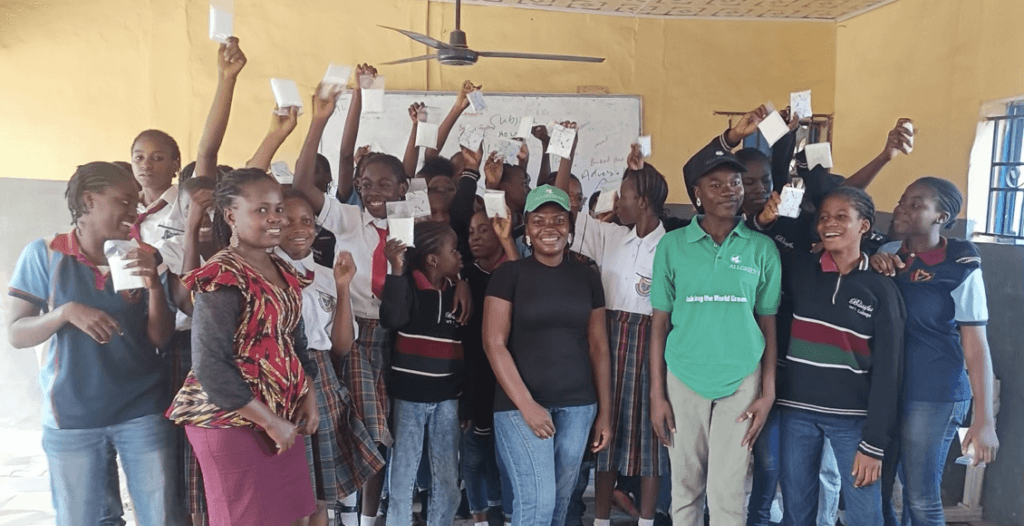
In Nigeria, two seemingly unrelated problems persist: 37 million women and girls suffer from period poverty, lacking access to sanitary products, while the agricultural sector discards massive amounts of banana fibers and other byproducts as waste.
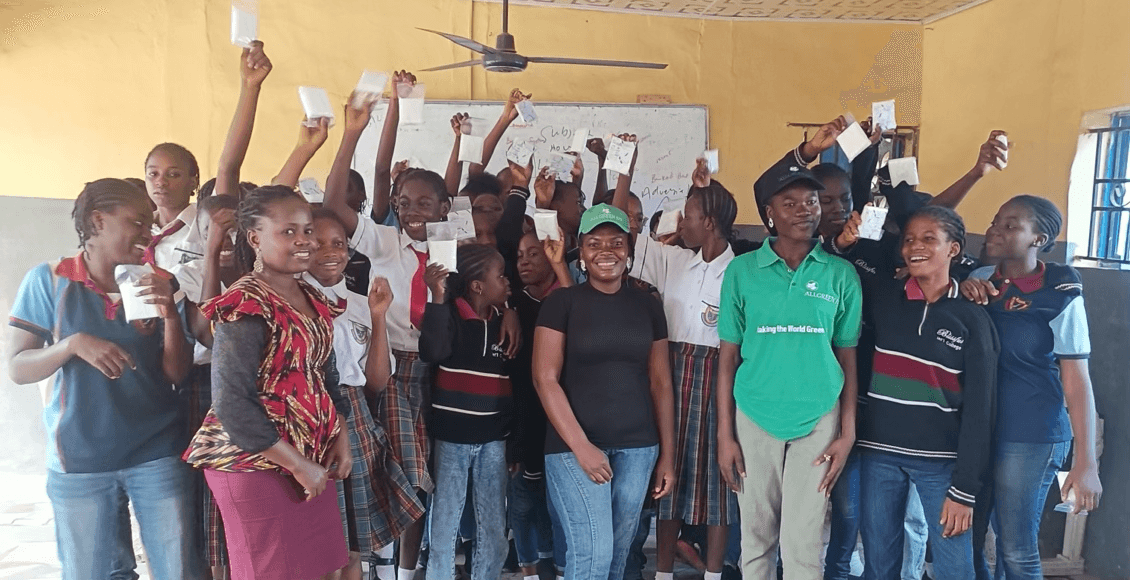
Lydia Ekpong Thompson’s idea came from identifying the link between these challenges. She had spent 15 years working in agriculture, watching valuable fibers go to waste, while knowing intimately what it felt like to lack access to menstrual hygiene products. She realized she could use the overlooked waste from her industry to solve the problem she had experienced personally. Her company, Allgreen Ivy Limited, processes agricultural waste into biodegradable sanitary pads, utilising materials like banana fibers and mesh cloth. Since launching in late 2024, the team has focused on the Southwest region of Nigeria, providing a chemical-free option to address the needs of marginalized women and girls. Currently producing about 100 packs a day, Lydia is now pushing to scale operations to over 3,500 packs daily to meet this urgent demand.
For Lydia, joining the 2025 ClimateLaunchpad programme was a “game changer” that bridged the gap between her agricultural background and sustainable business. Transitioning to the sustainability space required a mindset shift, and the training on calculating carbon footprints pushed her to “think deeper” about every step of her production process. The programme gave her the visibility she needed by teaching her how to communicate her ideas with clarity and confidence.
Rekool Access Technology: Solar cooling that saves lives
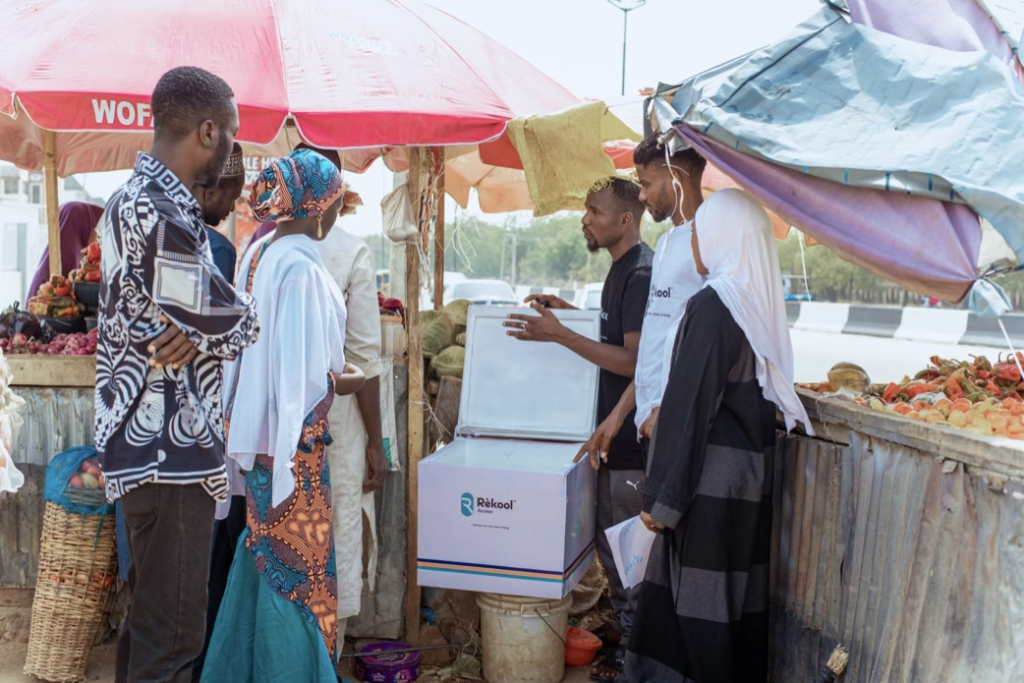
In northern Nigeria, a broken cold chain has severe consequences. Extreme heat and unreliable electricity mean that life-saving vaccines often spoil before they reach the children who need them most. Health workers face the harsh reality of walking 10 to 15 kilometres to deliver vaccines, only to arrive too late because the doses have lost potency in the heat.
For Aishat Adama Adamu, this crisis was not abstract, it was personal. Witnessing healthcare systems fail these children firsthand inspired her to act. Her response was Rekool Access Technology, which installs solar-powered cooling units in rural clinics to keep vaccines viable regardless of the power grid. It is a practical intervention that is already working across Kaduna, Kano, and Borno states, where child mortality rates from vaccine-preventable diseases in their project areas have dropped from 56% to 47.5%. Furthermore, the solution goes beyond healthcare; Rekool also supports farmers and meat sellers, using the same technology to reduce post-harvest losses and preserve food.
For Aishat, the shift during ClimateLaunchpad was about precision. A session on “impact measurement” proved transformative, moving her team from broad ambitions to a “more specific and more focused” definition of success. Strengthened storytelling skills further helped them understand how “stories can be told in better ways” to convey the urgency of their mission to investors and partners.
SafeSip: Portable innovation for clean water access
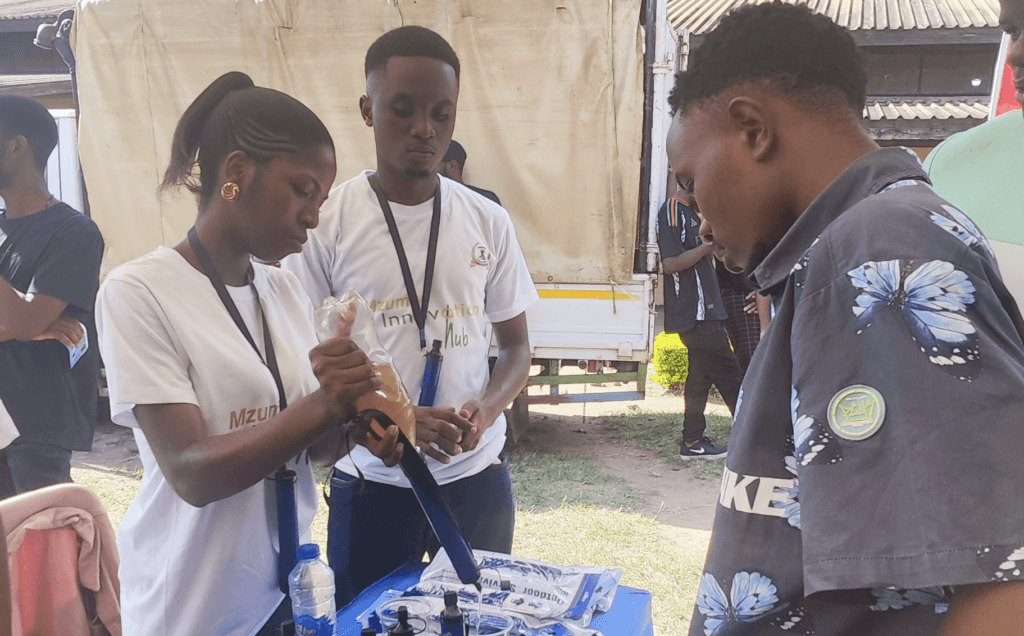
In many Tanzanian communities, families have no choice but to rely on contaminated river water for drinking, leading to widespread waterborne diseases. This situation is further complicated in areas where the only available water is naturally salty and undrinkable.
Faith Kuya didn’t start SafeSip just as a business opportunity; it came from her own childhood in a community where the water made people sick. “Most of my friends and I used to be sick because of the waterborne diseases,” she explains. That experience drove her to find a way to help others in similar situations. In 2023, she co-founded SafeSip to offer a practical fix: filtration straws that remove contaminants and microplastics. They have distributed over 23,000 straws so far, but Faith realized simple filtration wasn’t enough for areas where the water is naturally salty. Now, backed by a team with 50 years of combined experience in water quality, her venture is also building “SafeSip Water Banks” that use reverse osmosis desalination to ensure even the most challenging environments have water that is safe to drink.
Faith found the coaching on KPIs crucial for elevating SafeSip, but the bigger breakthrough came in in her approach to data after taking part in ClimateLaunchpad. Her team advanced from informal clinic visits to systematic interviews and questionnaires, giving SafeSip the robust evidence it needs to demonstrate impact to partners and investors and build trust with local communities.
The Next Chapter: Amplifying Reach Through Collaboration
Equipped with these new skills, all three ventures are now focused on an ambitious goal: widespread, amplified impact. They understand that systemic change cannot be achieved in isolation, and they are actively seeking the strategic alliances necessary to scale. Aishat is targeting collaborations with major bodies like UNICEF and Nigeria’s National Primary Healthcare Development Agency. Lydia is pursuing partnerships with the Federal Ministry of Women Affairs and grassroots NGOs to better reach marginalized communities, while Faith is focused on building essential trust with local government authorities and NGOs dedicated to water and sanitation.
To meet the growing demand for their solutions, securing funding for production is critical. Lydia plans to acquire new equipment that will increase production tenfold, jumping from roughly 100 sanitary packs a day to over 1,000. Aishat needs financing for “large-scale production” to achieve her goal of deploying 200 new solar-powered units in the next year. Faith is raising investment to construct five new SafeSip Water Bank hubs. Their vision also extends well beyond their current locations; while Lydia and Aishat are scaling operations to new states across Nigeria, Faith is planning to expand SafeSip’s solutions regionally into Ethiopia, South Sudan, and Uganda.
The journeys of Faith, Aishat, and Lydia are powerful reminders that the most effective climate solutions are often born from lived experience. They are not just building companies; they are restoring health and resilience to their communities.
“We are proving that sustainability is not just possible,” Lydia states powerfully. “It is essential for a better future, and it begins with you and I”.
Learn more about ClimateLaunchpad and it’s 2026 programme.